Skip to content
Technology Choices in the Electron Ecosystem
Scaffold selection
There are quite a few scaffold choices for Electron.
Official options include:
If the application is not very complex, an official starter can be enough to get moving quickly.
There are also open-source scaffolds such as:
These can generate a working template quickly, then you fill in your own business logic.
My own view is:
- official scaffolds are good for learning and experimentation
- tools like
electron-vueare convenient early on, but not always ideal for long-term enterprise-scale expansion - many of these older tools are Webpack-based, and the daily compile speed can feel noticeably slower than Vite
If you want to build your own project scaffold, that is also worthwhile. It helps you understand Electron's build process, learn through actual pitfalls, and gain deeper control over the architecture.
That is why my own scaffold choice is to build an Electron project structure from scratch with:
- Vite
- Electron
- React
HTTP module selection
There are several ways to make HTTP requests in Electron.
Option 1: split between renderer and main process
- renderer process uses tools like
axiosorfetch - main process uses Node-side APIs such as
net
Pros
- renderer and main process responsibilities stay clear
- renderer requests are easy to debug in the Network panel
Cons
- unified request encapsulation becomes more awkward
Option 2: centralize everything behind one request layer
You can wrap all requests around net or another single tool, call it directly in the main process, and let the renderer go through bridge methods.
Pros
- fully unified request abstraction
Cons
- request debugging becomes less convenient
- logs often need to be inspected from the main process
Option 3: use Axios everywhere
Axios supports both Node and browser environments, so the request layer can feel very natural to frontend developers.
Pros
- simplest mental model
- very similar to normal web application request encapsulation
Cons
- you need to be careful about cross-origin behavior
- some teams end up disabling
webSecurity, which Electron does not recommend from a security perspective
Electron security reference:
https://www.electronjs.org/docs/latest/tutorial/security
Each option has trade-offs, so the right choice depends on the project.
Local database selection
Electron also has many local data storage options:
- plain file read/write
- structured local database libraries
- key-value stores
Here is a useful comparison reference:
https://www.npmtrends.com/electron-store-vs-lokijs-vs-lowdb-vs-nedb-vs-realm
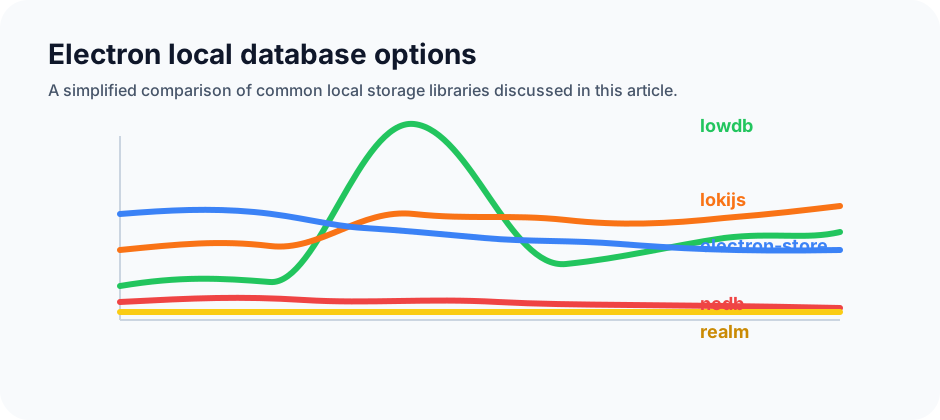
After comparing the options, I prefer lowdb. One practical reason is that it supports synchronous access, which helps avoid race conditions when later logic depends on local data being written already.
Logging tool selection
Logging is extremely important in Electron development. It helps uncover issues that are difficult to locate from surface UI behavior alone.
Two common choices are:
Trend comparison:
https://npmtrends.com/electron-log-vs-express-winston-vs-log4js-vs-logging
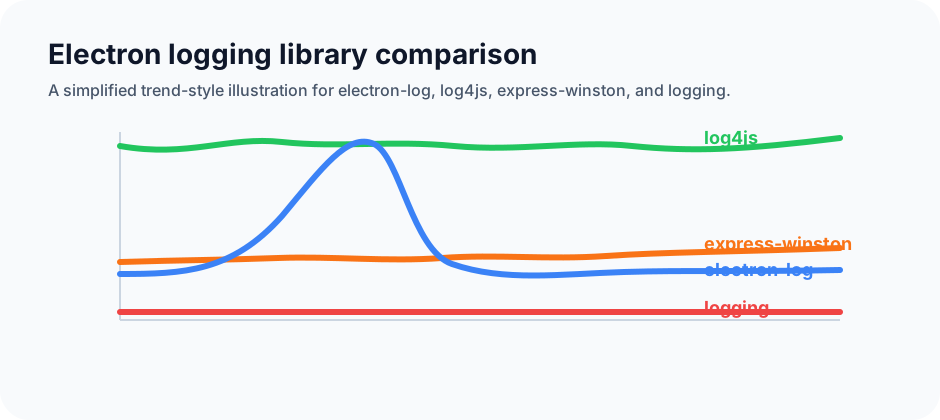
From direct usage experience:
- both are easy to start with
log4js-nodeexposes a richer APIelectron-logis simpler, but its log file path can be less convenient to controllog4js-nodegives you more flexibility over file destinations and log structure
So my recommendation is log4js-node.
System information collection
For collecting system information from Node, I recommend:
Why:
- it is very powerful
- it can collect system, process, CPU, and many other categories of machine information
- it already solves many cross-platform differences internally
- it is also a good tool for learning the system commands behind the scenes
Build tool selection
Three common Electron packaging tools:
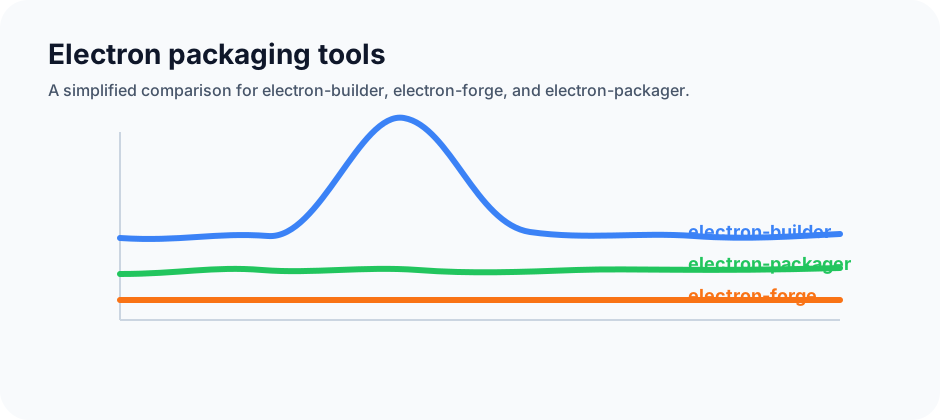
From both ecosystem usage and actual experience, electron-builder remains a strong choice. It integrates packaging, updating, signing, and distribution into one larger solution.
That is the packaging tool I chose in practice.
Summary
Technology selection matters a lot when starting an Electron project. The comparisons above are not absolute rules, but they help narrow down a practical stack.
Once the core stack is chosen, the next step is to build a project structure that fits your own needs and development habits.